Hearing is one of our most valuable senses, connecting us to conversations, music, loved ones, and the world around us. Yet hearing loss often develops so gradually that many people don't notice the changes until it begins affecting their daily lives.
In fact, many adults assume others are mumbling or that background noise is simply getting louder. However, these subtle changes may be the first signs of hearing loss.
The good news is that early detection can make a significant difference. With timely assessment and appropriate hearing care, many people can continue enjoying an active, connected lifestyle.
At Smart Hearing, we believe that recognising the early warning signs is the first step towards better hearing health.
Do you often find yourself saying:
Occasionally asking someone to repeat themselves is perfectly normal. However, if it happens regularly—especially in everyday conversations—it may indicate that your hearing is beginning to decline.
Hearing loss often affects speech clarity before overall volume, making words sound muffled even when voices seem loud enough.
Has your family started commenting that the television is too loud?
One of the earliest signs of hearing loss is needing to increase the volume on the TV, radio, or phone while others are comfortable with lower settings.
If you're consistently adjusting the volume higher than those around you, it's worth scheduling a hearing assessment.
Restaurants, cafés, shopping centres, family gatherings, and workplaces can be challenging environments for someone with hearing loss.
You may hear people talking but struggle to distinguish individual words because background noise competes with speech.
Many people mistakenly believe this is simply part of getting older, but it is actually one of the most common symptoms of early hearing loss.
Persistent ringing, buzzing, humming, or whistling sounds are commonly known as tinnitus.
Although tinnitus has several possible causes, it is frequently associated with hearing loss.
If these sounds occur regularly or interfere with your daily life, they should be assessed by an experienced audiologist.
Have you stopped noticing sounds like:
High-frequency hearing loss often develops first, causing these everyday sounds to become less noticeable over time.
Many people don't realise what they've been missing until their hearing is professionally assessed.
Hearing loss doesn't just affect your ears—it places extra strain on your brain.
When sounds become unclear, your brain works much harder to interpret conversations. This increased effort can leave you feeling mentally exhausted after meetings, family gatherings, or even casual conversations.
If social situations leave you unusually tired, hearing loss may be contributing.
Many people with untreated hearing loss gradually withdraw from social activities because conversations become frustrating or embarrassing.
You may avoid:
Unfortunately, avoiding social interaction can affect emotional wellbeing, confidence, and overall quality of life.
Ignoring hearing loss doesn't make it disappear.
The earlier hearing changes are identified, the easier they are to manage.
A professional hearing assessment can:
Early intervention often leads to better hearing outcomes and improved quality of life.
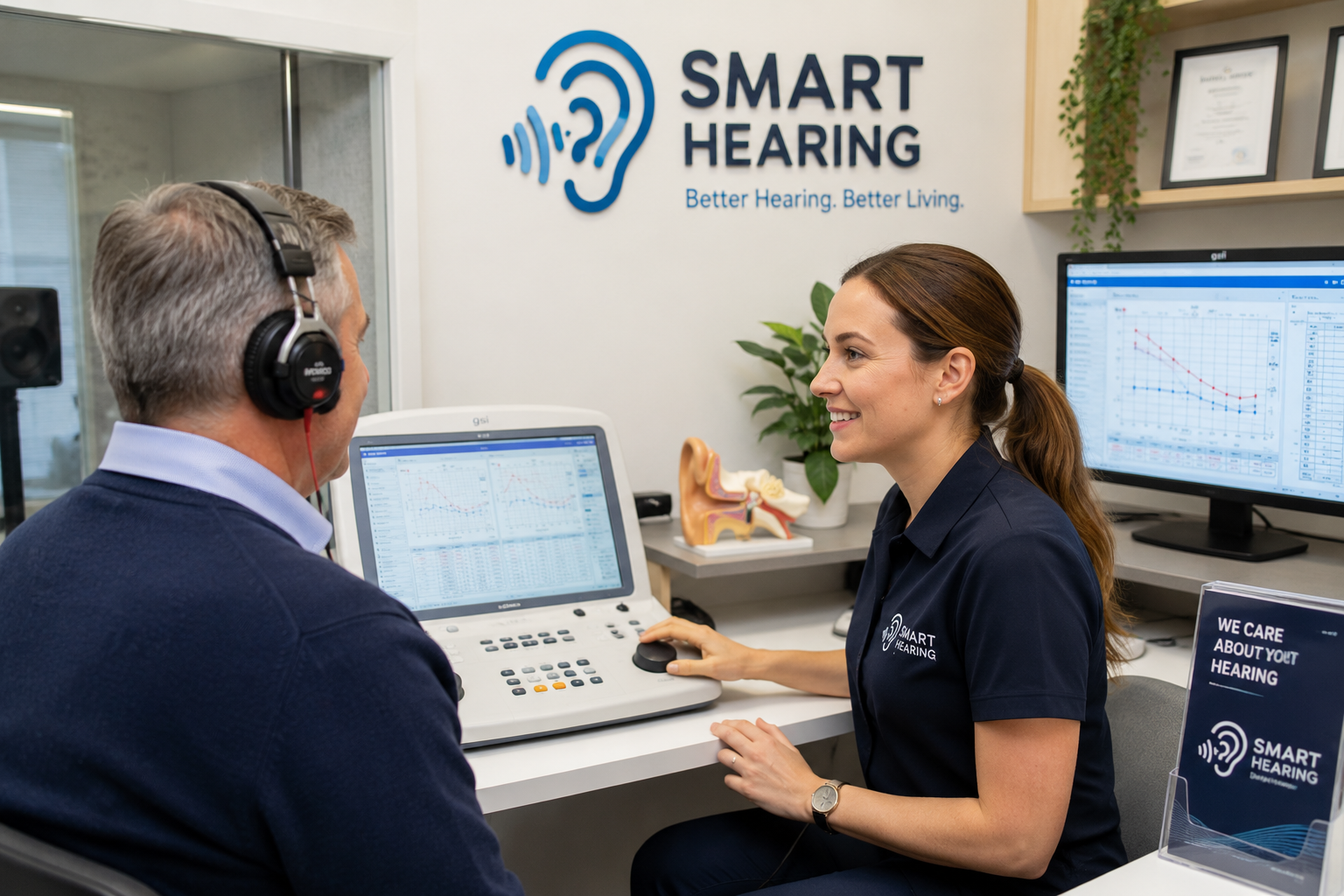
At Smart Hearing, we are dedicated to helping people hear better through expert care and personalised hearing solutions.
Our experienced audiologists provide:
Using advanced diagnostic technology, we deliver hearing solutions tailored to your individual needs and lifestyle.
You should consider booking a hearing assessment if:
A hearing test is simple, painless, and can provide valuable insights into your hearing health.
Your hearing plays an important role in every conversation, every relationship, and every moment of your day.
If you've noticed changes in your hearing, don't wait for the problem to worsen.
The experienced team at Smart Hearing is here to provide professional assessments, personalised advice, and hearing solutions that help you stay connected to the people and sounds you love.
Book your hearing assessment with Smart Hearing today and take the first step towards clearer hearing and a better quality of life.
If you frequently ask others to repeat themselves, struggle in noisy environments, or notice changes in everyday sounds, it's time to schedule a hearing assessment.
No. Hearing loss can also result from prolonged noise exposure, certain medical conditions, ear infections, genetics, and some medications.
Adults over 50 should have their hearing checked every one to two years, or sooner if they notice any changes.
Many types of hearing loss can be effectively managed with hearing aids, assistive listening devices, and professional hearing care.